


Page 59 - 2025S
P. 59
52                                                                UEC Int’l Mini-Conference No.54


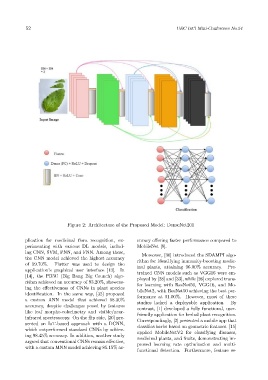
                               Figure 2: Architecture of the Proposed Model: DenseNet201


            plication for medicinal flora recognition, ex-    curacy offering faster performance compared to
            perimenting with various DL models, includ-       MobileNet [8].
            ing CNN, SVM, PNN, and FNN. Among these,            Moreover, [30] introduced the SDAMPI algo-
            the CNN model achieved the highest accuracy
            of 99.70%.   Flutter was used to design the       rithm for identifying immunity-boosting medic-
                                                              inal plants, attaining 96.00% accuracy.  Pre-
            application’s graphical user interface [13]. In   trained CNN models such as VGG16 were em-
            [14], the PB3C (Big Bang–Big Crunch) algo-        ployed by [28] and [33], while [26] explored trans-
            rithm achieved an accuracy of 93.20%, showcas-    fer learning with ResNet50, VGG16, and Mo-
            ing the effectiveness of CNNs in plant species
                                                              bileNet2, with ResNet50 achieving the best per-
            identification. In the same way, [32] proposed
                                                              formance at 91.00%. However, most of these
            a custom ANN model that achieved 98.30%           studies lacked a deployable application.  By
            accuracy, despite challenges posed by features    contrast, [1] developed a fully functional, user-
            like leaf morpho-colorimetry and visible/near-    friendly application for herbal plant recognition.
            infrared spectroscopy. On the flip side, [20] pre-  Correspondingly, [2] presented a mobile app that
            sented an IoT-based approach with a DCNN,
                                                              classifies herbs based on geometric features. [15]
            which outperformed standard CNNs by achiev-
                                                              applied MobileNetV2 for classifying diseases,
            ing 98.45% accuracy. In addition, another study   medicinal plants, and fruits, demonstrating im-
            argued that conventional CNNs remain effective,   proved learning rate optimization and multi-
            with a custom MNN model achieving 85.15% ac-
                                                              functional detection. Furthermore, feature se-

