


Page 60 - 2025S
P. 60
UEC Int’l Mini-Conference No.54                                                               53


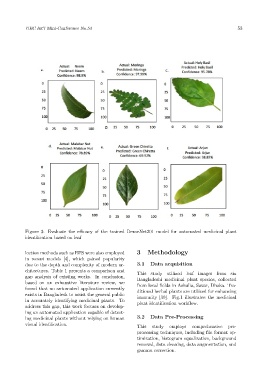
            Figure 3: Evaluate the efficacy of the trained DenseNet201 model for automated medicinal plant
            identification based on leaf


            lection methods such as EFS were also employed    3    Methodology
            in recent models [4], which gained popularity
            due to the depth and complexity of modern ar-     3.1   Data acquisition
            chitectures. Table 1 presents a comparison and    This study utilized leaf images from six
            gap analysis of existing works. In conclusion,    Bangladeshi medicinal plant species, collected
            based on an exhaustive literature review, we
                                                              from local fields in Ashulia, Savar, Dhaka. Tra-
            found that no automated application currently     ditional herbal plants are utilized for enhancing
            exists in Bangladesh to assist the general public  immunity [30]. Fig.1 illustrates the medicinal
            in accurately identifying medicinal plants. To    plant identification workflow.
            address this gap, this work focuses on develop-
            ing an automated application capable of detect-
            ing medicinal plants without relying on human     3.2   Data Pre-Processing
            visual identification.
                                                              This   study  employs   comprehensive   pre-
                                                              processing techniques, including file format op-
                                                              timization, histogram equalization, background
                                                              removal, data cleaning, data augmentation, and
                                                              gamma correction.

